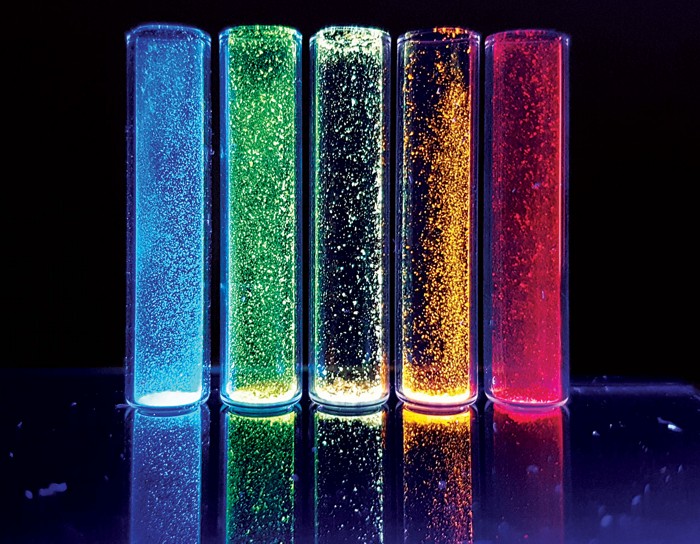
These pyrrole and oligopyrrole products fluoresce under 365 nm UV light as they swirl in their vials. Yogesh Kumar Maurya and Liliia Moshniaha synthesized them through a series of organic transformations. Their tunable absorption, emission, and redox properties make them useful platforms for functional chromophores, charge-storage materials, energy and electron transfer, and photodynamic therapy.
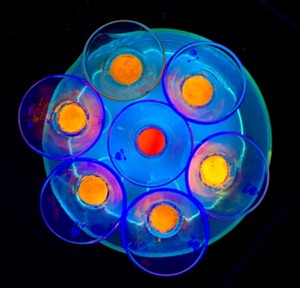
The intense red fluorescence of a π-extended pyrrole inspired Joanna Hager and Yogesh Kumar Maurya to arrange this composition. In a filter funnel under bluish light, the compound resembled a flower pistil floating in water; other fluorescent products from the lab completed the scene.
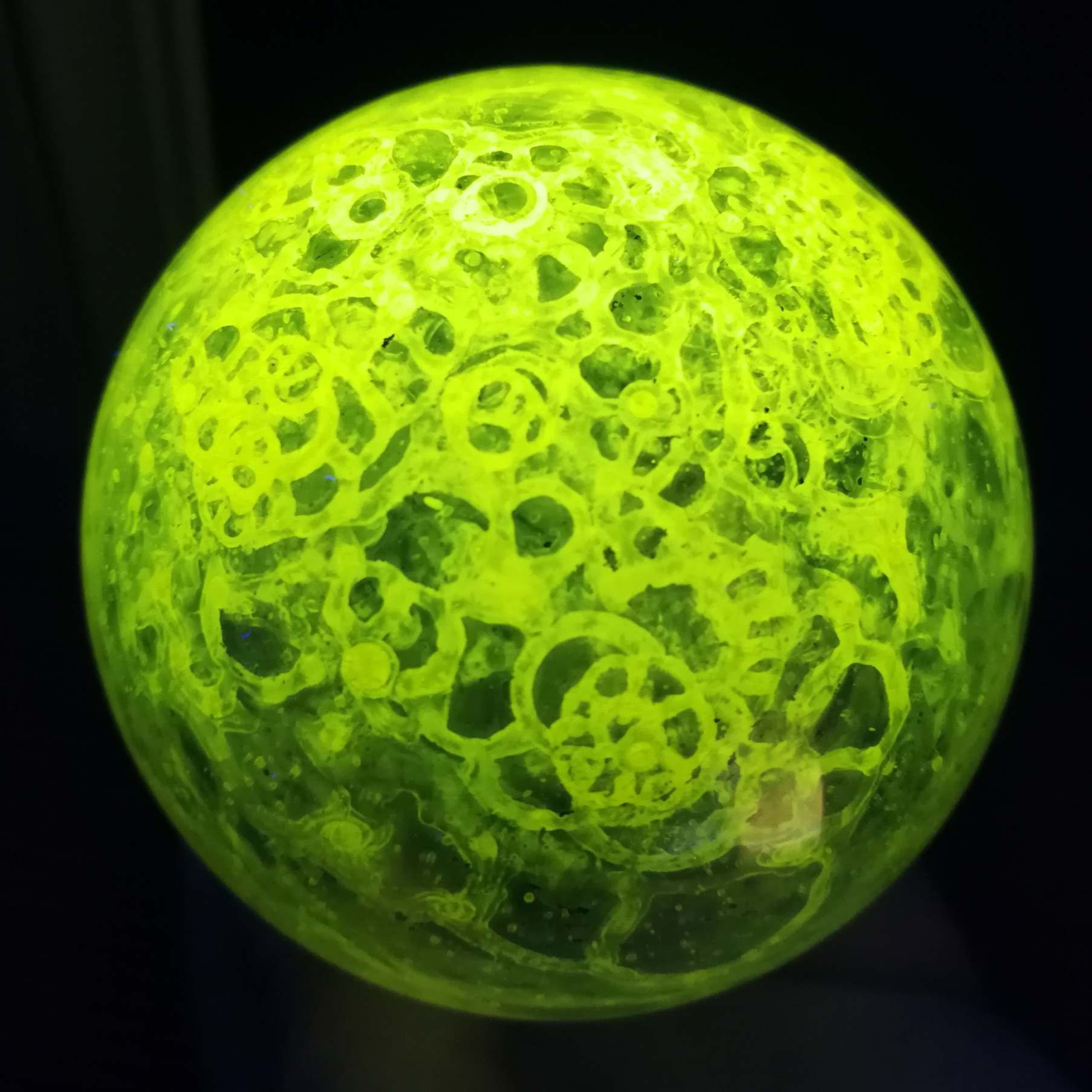
During column chromatography of an azacoronene precursor, Daniel Matuszczyk noticed a fraction that emitted intense green light under UV irradiation, even in the solid state. The glow of this π-extended pyrrole chromophore resembles wildfire on a distant planet.
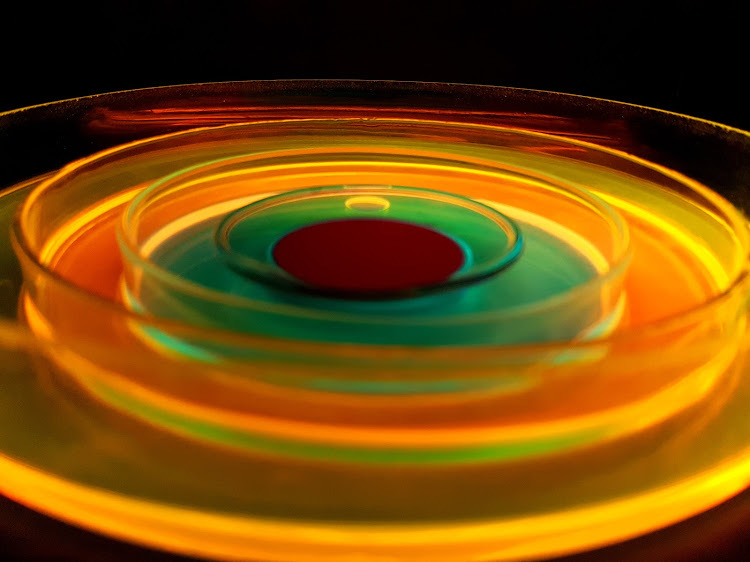
Ripples spread through a solution of orange- and yellow-emitting compounds in a Petri dish, making the fluorescence appear to fade away from the center. Liliia Moshniaha and Yogesh Kumar Maurya captured the effect for Fluorescence Friday after noticing a slowly falling water droplet.